Undermount or Drop In Sink for a Greenville Stone Countertop
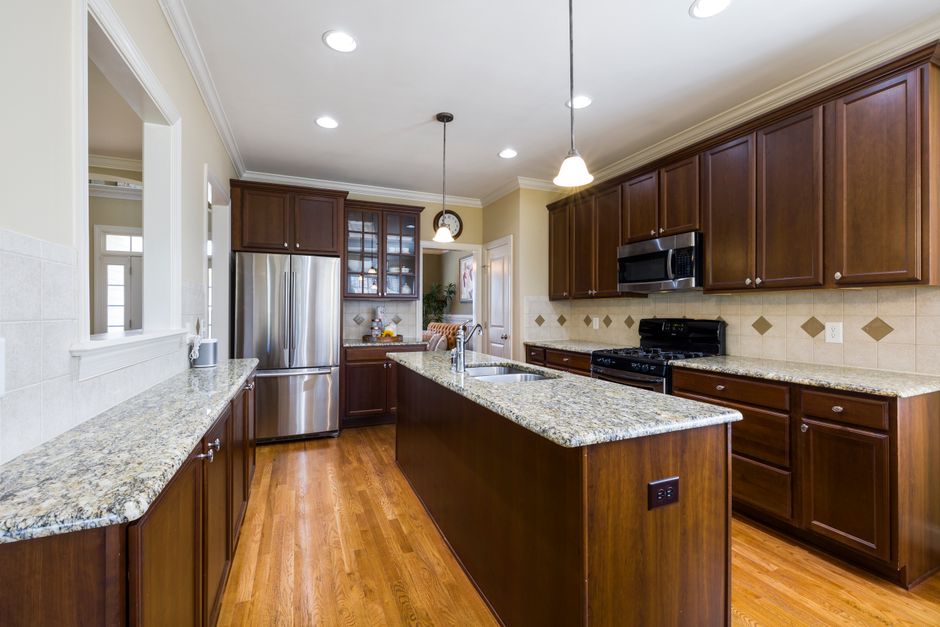
An undermount sink is the better looking and easier wiping choice for most stone and quartz countertops in Greenville, but a drop in sink is the easier one to maintain and replace. Which one is better for you depends on how much you value a clear counter surface today against a simple swap years from now.
Both work with granite, quartz, quartzite and marble. Stone is solid through its full thickness, so water at a cut edge is not a threat the way it is for laminate over particleboard. That is why drop in sinks are the default on laminate and only a choice on stone.
How Each Sink Sits in the Stone
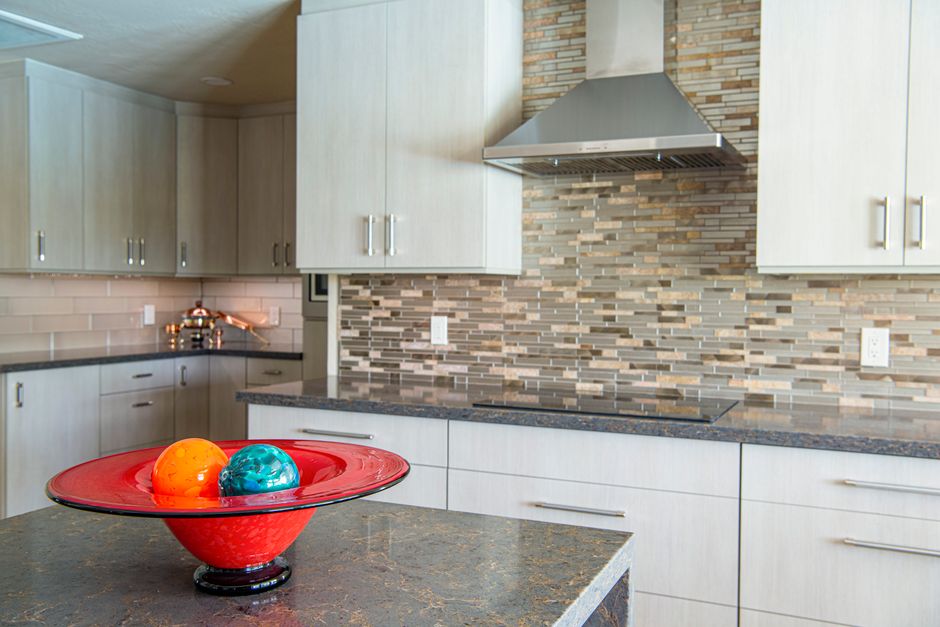
An undermount sink hangs below the countertop. The stone's cut edge around the opening stays visible, so the fabricator has to shape and polish it. A drop in sink rests its rim on top of the counter and covers the cut edge, so the opening can be left rough sawn.
That one difference drives most of the others: appearance, cleaning, how the sink is held up, and how hard it is to replace later.
Cleaning Day to Day
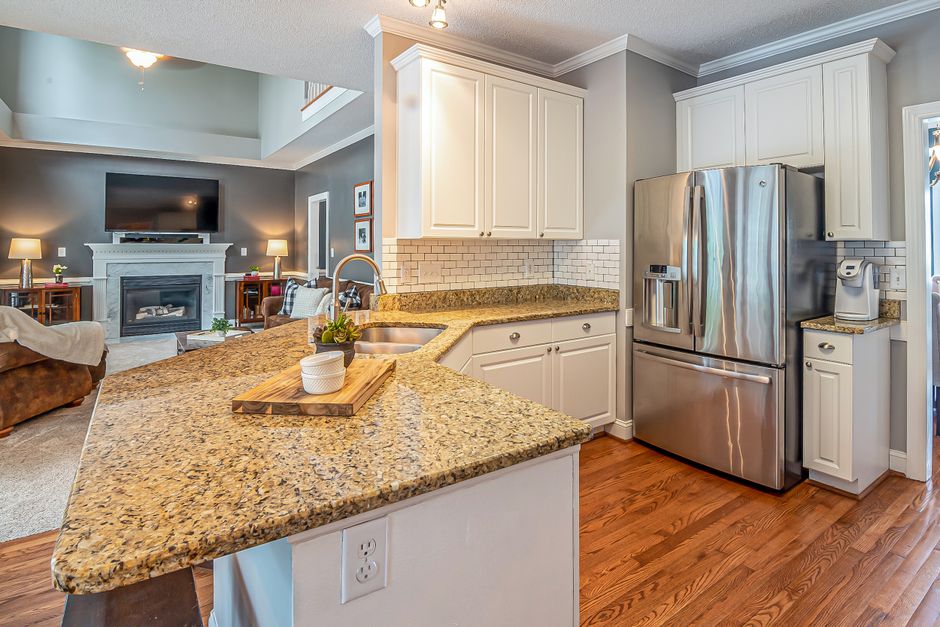
Undermount wins on the countertop surface. Crumbs and spills wipe straight into the bowl with nothing to catch them. A drop in sink has a raised rim and a caulk line that collect grime, and that bead is where mildew usually shows up first.
The tradeoff with undermount is a hidden joint below, where the sink lip meets the stone. You cannot see it while wiping, so it needs a deliberate look a few times a year. Shine a flashlight around the seam from inside the bowl, then check it from below inside the cabinet.
Humidity and the Sink Seal
Greenville summers are long, hot and humid, and any sink seal that stays damp tends to grow black spots. Recaulk with a mildew resistant pure silicone rated for kitchen and bath when they appear. Bleach on the surface rarely fixes mildew that has grown into the bead.
A drop in rim is easy to inspect, scrape out and redo yourself. An undermount seam takes more effort to reach, but the same rule applies: neither style is a seal you can forget about.
Water Quality
Greenville's municipal water comes from mountain reservoirs and is relatively soft, so mineral scale at sink seams is usually less of a problem than in hard water regions. Homes in outlying parts of the county on private wells can differ, so test well water before assuming the same.
What Actually Holds the Sink Up
Support is where an undermount install is won or lost. A sink should be held by mechanical fasteners anchored into the underside of the stone, such as epoxy set studs or anchor clips, plus a sealant bead. Silicone or adhesive alone is a bond, not a support. A sink held only by adhesive can let go, especially once it is full of water and dishes.
Heavy sinks need more than clips. Cast iron, fireclay and large double bowl stainless with a garbage disposal hanging from it usually call for a support frame, rails or blocking built into the sink base cabinet. Ask your installer which method is planned before install day.
Disposals and Slow Sagging
Disposal weight and vibration work on undermount clips over time. If a gap opens at the seam, or the sink sits lower on the disposal side, have the clips retightened or reset. Filling the gap with more caulk hides the problem without fixing it.
A drop in sink carries its weight on its rim, which rests on the countertop. That makes support simpler, though the opening and cabinet still need to be sound.
Cutout Edges and the Weak Strip of Stone
The narrow strips of stone in front of and behind a sink opening are the weakest part of the whole countertop. Cracks most often start there or at the cutout corners. Rounded inside corners resist cracking better than sharp ones, and many fabricators reinforce the front strip of natural stone with embedded rods.
Quartz is not crack proof either. Thermal shock and stress at cutout corners can still split it. Engineered stone brands such as Cambria are sold on durability, but the geometry around a sink opening is the same for every material.
Never kneel or stand on the counter in front of the sink to reach a window or light. Do not let anyone lean their full weight on that front strip during plumbing work, either.
Choosing the Reveal
Undermount sinks come with three reveal choices, and the choice cannot be changed after the top is cut:
- A positive reveal shows a small ledge of sink rim, which catches gunk.
- A negative reveal lets the stone overhang the bowl, which hides the rim but leaves a thin stone edge that can chip.
- A zero or flush reveal looks cleanest but demands precise alignment.
Caring for the Exposed Edge
On granite, the polished cutout edge sees standing water every day, so include it when you reseal. Splash water on the edge: if it darkens within a few minutes, it is time. Sealing helps, but it does not make granite stainproof or waterproof forever. Quartz does not need sealing.
Marble and other calcite based stones etch from acidic foods and cleaners, and the exposed undermount edge is often the first place it shows. Use pH neutral cleaners around the sink on those stones.
Planning Details That Catch People Out
Give the Fabricator the Real Sink
Undermount openings are cut to match a specific sink. The fabricator needs the actual sink, or its exact manufacturer cutout template, at templating time. Swapping sinks after the top is cut is the most common cause of mismatched reveals and extra cutting.
Count the Holes
With an undermount, faucet and accessory holes are drilled through the stone itself. Many drop in sinks come with pre-punched holes in their own deck. Decide on the faucet, soap dispenser, sprayer and air gap before fabrication. Adding a hole later is possible but riskier.
Check the Cabinet First
In older Greenville housing, check that the sink base is level, square and solidly attached to the wall before templating. That includes mill village homes around Monaghan, Judson and Brandon, and older houses near North Main. An out of level cabinet or a tired box puts uneven stress on stone right at the cutout.
Older kitchens also often have narrower sink bases than current designs. Measure the inside width before falling for a large single bowl. The bowl and its support have to physically fit inside the box.
Apron front sinks, especially fireclay, usually need a cabinet built or modified for them, plus their own support platform. Do not plan one as a simple swap into a standard sink base.
Replacing the Sink Years Later
Replacement is where drop in sinks win. If the new sink's rim covers the old opening, the swap is mostly a plumbing job.
An undermount replacement means cutting the old sink free from below, and the new sink must fit the existing cutout. A cutout can be enlarged but never made smaller. When shopping, look for a model whose bowl opening matches or slightly exceeds the current cutout, and match the reveal style you have now for the cleanest result. Bring the old sink's measurements, not just the cabinet size.
Enlarging a Cutout Safely
Enlarging an opening in place means cutting stone in your kitchen. Cutting engineered quartz and many natural stones releases respirable crystalline silica, which is silicon dioxide dust, and repeated exposure can cause silicosis. The work should be done wet with dust control by a professional, with family and pets out of the room.
Which One to Choose
Choose undermount if you want a clean counter, you will wipe the surface daily, and you are willing to inspect a hidden seam and keep the clips tight. Choose a drop in sink if you want the simplest support, an easily redone seal, and a painless swap down the road. Neither is wrong on granite or quartz. Undermount rewards good fabrication and planning up front, and drop in rewards low effort over the years.