How to Judge Countertop Fabrication and Installation Quality

Most people pick a slab off a small sample under showroom lights and never ask where the seam falls or how the overhang is carried. The checks below are the ones a fabricator makes at the shop and on install day, and the list on countertops greenville backyard barter follows that same order for countertops in Greenville, SC, from the first look at the stone to the care sheet left on the finished surface.
Look at the actual slab
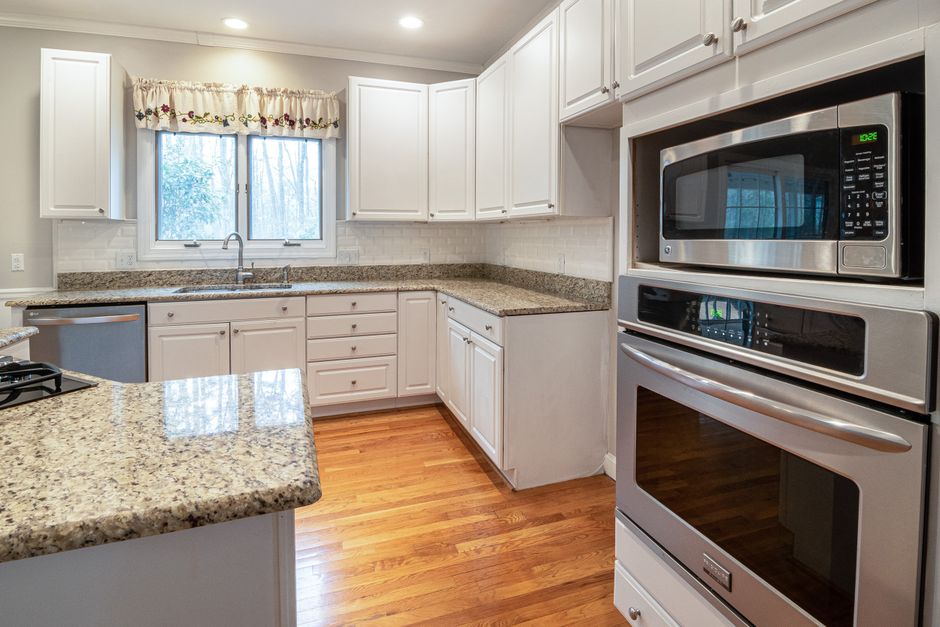
A sample the size of a coaster hides veining, pits and color shifts. Careful shops let the homeowner walk the yard and see the real slab, and often the layout, before a blade touches it. Granite, quartzite and marble vary a lot from one slab to the next. Quartz is more uniform, but the pattern can still run differently across a sheet. A remnant is worth a look for a vanity or a small island, since the stone is already cut and priced lower.
Seam placement

A good seam is tight, flush between the two pieces, and filled with adhesive color matched to the stone. Run a fingernail across it. A visible seam does not always mean poor work, since some stone and some colors show a line no matter what. Seam placement matters more. Seams usually belong away from the sink and cooktop cutouts, where the stone is narrow and under the most stress. Ask where each one lands on the layout before cutting begins.
Cutouts and reinforcement
The strips of stone at the front and back of a sink cutout are the weak point. Some fabricators reinforce them with steel or fiberglass rods set into the underside. Check that the cutout corners are rounded and not sharp inside, because a square corner concentrates stress and starts cracks. This applies to granite, quartz and porcelain alike.
Edge profile and overhang
An edge profile should look the same along the full length, with an even polish and no chips or rough spots. Compare an eased edge, a bullnose and a waterfall edge on a full-size mockup, since a small sample overstates how soft or sharp each one reads. Overhangs for seating need proper support, such as steel brackets or corbels. Stone can snap if leaned on without it, and extra thickness does not remove the need to ask. Templating comes first, and the template should be checked against the cabinets before any cutting.
Dust and care instructions
Cutting stone, and engineered quartz in particular, releases respirable crystalline silica dust. A responsible shop cuts wet and uses dust controls, and the same goes for work done in a driveway near Falls Park on the Reedy or anywhere else in Greenville County. Not all quartz and granite are fabricated the same way, so ask how each is handled. Before the crew leaves, the installer should hand over care instructions for that material, including cleaners to avoid and whether the stone needs sealing. Butcher block, laminate, solid surface and soapstone each have their own routine, and a sheet that only says wipe with soap is not enough.